Pix Animator – Pixel Asset Workshop for Humans and Coding Agents
Type: Software Status: MVP Tech Stack: TypeScript, Node.js 22, MCP (@modelcontextprotocol/sdk), zod, sharp, Vanilla JavaScript (web UI), Server-Sent Events, Godot 4 (preview/export), Playwright, node:test Problem Statement Pixel art assets for games — whether hand-drawn or produced by image generators — come with recurring defects: baked-in checkerboard backgrounds, jumping anchors, inconsistent standing heights and poses that
THE IDEA
Pix Animator – Pixel Asset Workshop for Humans and Coding Agents
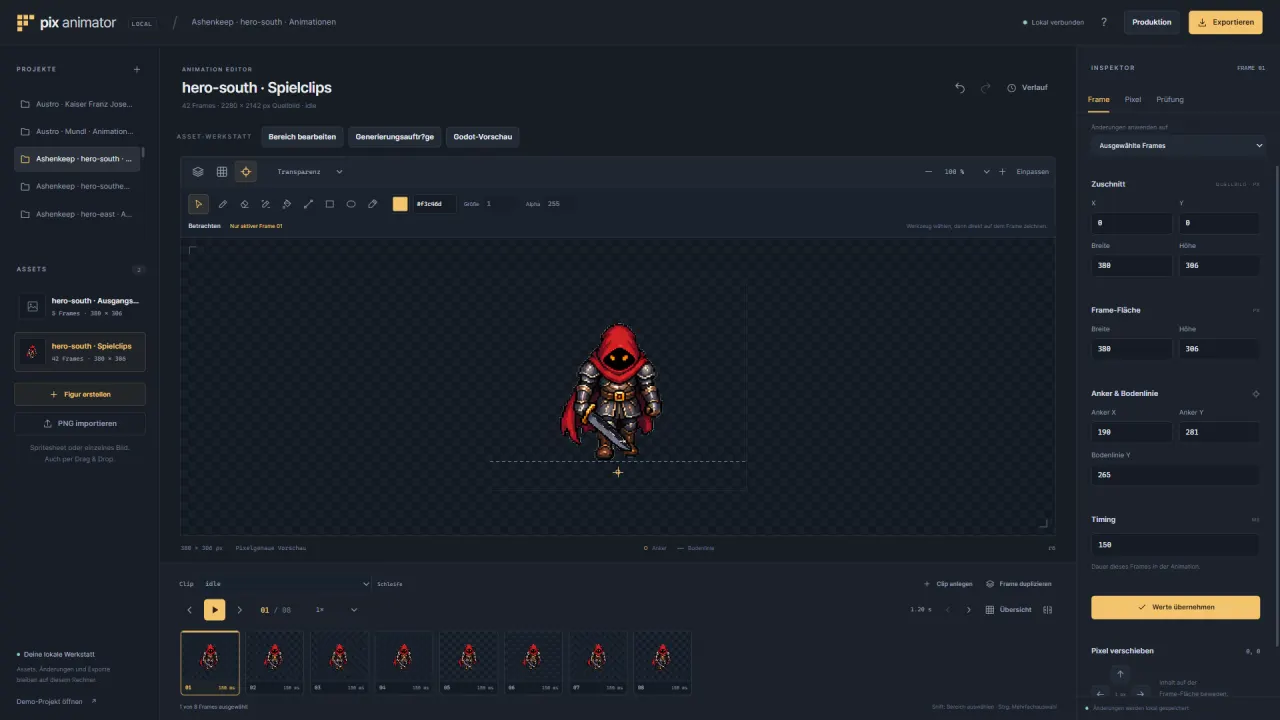
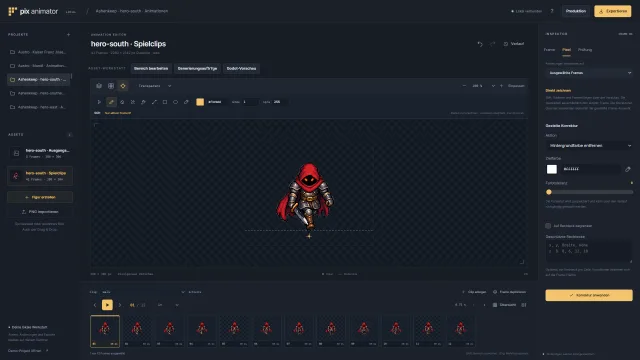
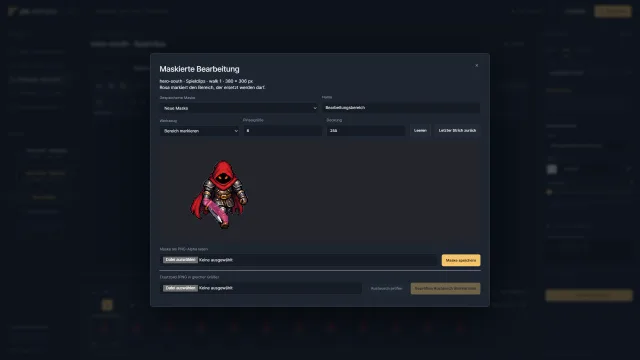
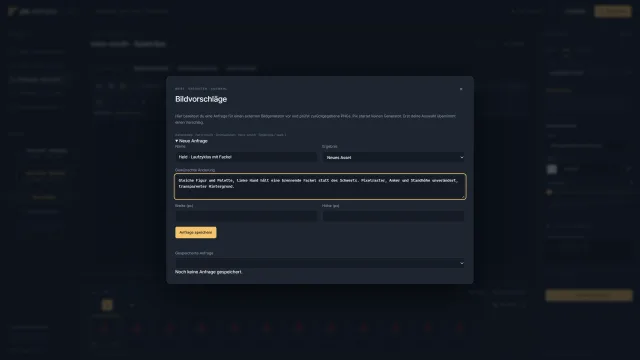
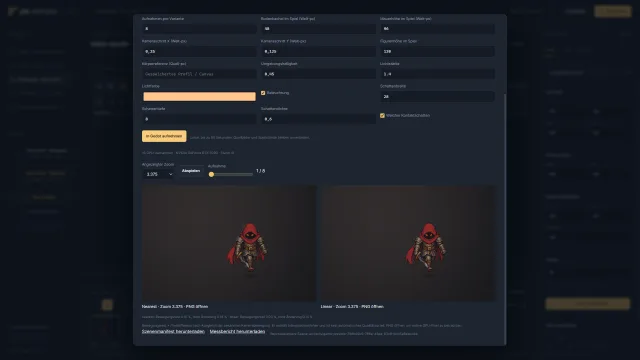
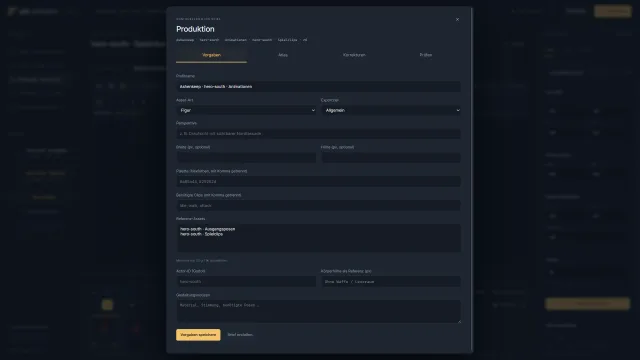
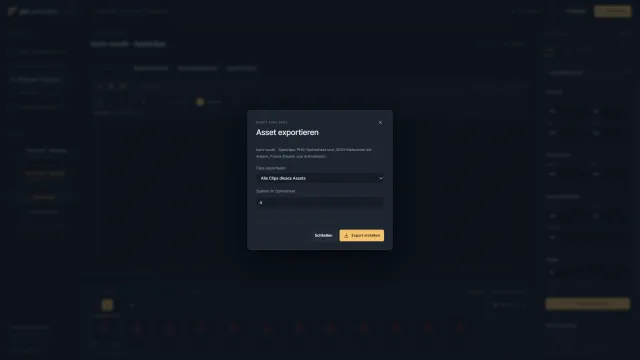
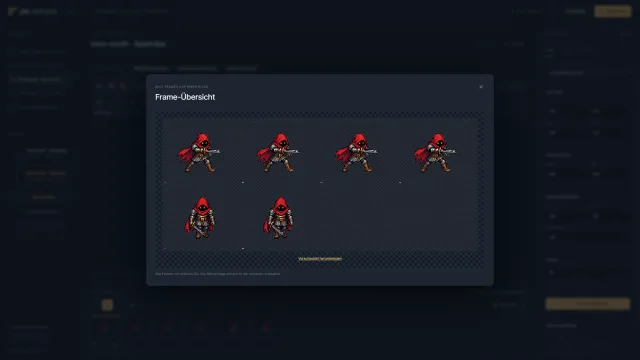
Type: Software Status: MVP Tech Stack: TypeScript, Node.js 22, MCP (@modelcontextprotocol/sdk), zod, sharp, Vanilla JavaScript (web UI), Server-Sent Events, Godot 4 (preview/export), Playwright, node:test Problem Statement Pixel art assets for games — whether hand-drawn or produced by image generators — come with recurring defects: baked-in checkerboard backgrounds, jumping anchors, inconsistent standing heights and poses that do not match the character. Coding agents can detect and fix such defects, but common pixel editors are not designed for a human and an agent to work on the same project state at the same time. The in-house games “Ashenkeep” and “Austro Kombat” therefore needed a workshop in which both access the same revisioned state and results are checked before they go into the game. Description Pix Animator is a local tool for creating, animating, checking and correcting pixel art assets, in which a human in the browser editor and an AI coding agent via MCP or CLI work on the same revisioned project state at the same time. A single workspace service serialises all changes atomically, prevents stale writes through revision numbers and reports changes live to the interface. The feature set ranges from a pixel editor with onion skinning and difference images, through a character construction kit with joints and key poses, named clips and mask-based image adoption, to generation requests for external image generators, including re-import and provenance records. For AI-generated combat moves, Pix normalises the results automatically (background removal, foot anchoring, scaling, palette binding, phase marking) and produces a review report. A real Godot scene checks textures and characters under sub-pixel camera movement, and a safeguarded export with staging, backup and rollback writes characters directly into the Godot game. The tool forms the asset pipeline of the in-house games “Ashenkeep” and “Austro Kombat”. Use Case A pixel art workshop in which an AI assistant checks and repairs game characters while you watch it live in the browser and can step in yourself at any time. Link: — (local repository without a remote) Animation editor: a hero character from “Ashenkeep” with named clips, frame strip, anchor and ground line. Drawing tools and targeted pixel correction, such as removing a background colour while protecting selected areas. Masked editing: only the area marked in pink may be replaced by a new image; everything else stays pixel-exact. Generation request: a brief for an external image generator — Pix does not run a generator itself, and nothing is adopted until a candidate is chosen. Godot preview: GPU captures of the character in a real Godot scene with lighting, contact shadow and sub-pixel camera movement, comparing nearest and linear filtering. Production: specifications for asset type, palette, required clips and reference assets as the basis for atlas, corrections and checks. Export as a PNG sprite sheet with JSON metadata for anchors, frame durations and animations. Frame overview of an attack clip, with stable frame IDs in animation order.
Impressions
KEEP EXPLORING
More discoveries
Three more pieces from the archive.
 PROJEKTE
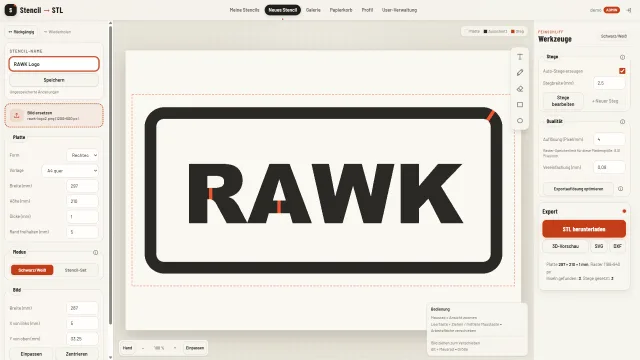
Stencils – Images, Text and Shapes as 3D-Printable Spray Stencils
Type: Software Status: Beta Tech Stack: TypeScript, Next.js 15, React 19, Tailwind CSS 4, PostgreSQL 16, Drizzle ORM, d3-contour, earcut, three.js, sharp, jose (JWT), OID...
↗ PROJEKTE
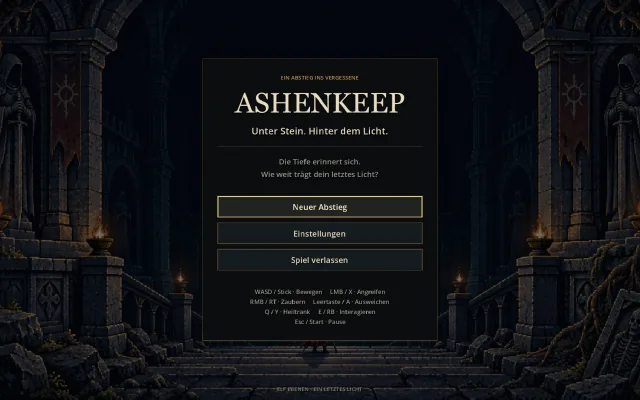
Ashenkeep Godot Edition – A Native Desktop Roguelite with Gamepad Support
Type: Game Status: Beta Tech Stack: Godot 4.7, GDScript, Godot Shading Language, GL Compatibility Renderer, Python (Pillow) asset pipeline, PowerShell, Pix Animator (char...
↗PROJEKTENUTHRO · Godot – A Procedural 3D Sector Shooter with Destructible Terrain
Type: Game Status: Beta Tech Stack: Godot Engine 4.7.2 (GDScript), GDShader (custom shaders for surfaces and first-person lighting), Blender 4.5 (Python scripting for mod...
↗SEND A SIGNAL
LET’S MAKE
SOMETHING
monstrous.
An idea beyond safe waters?
For extraordinary collaborations, consulting and workshops: send a signal.