NUTHRO · Godot – A Procedural 3D Sector Shooter with Destructible Terrain
Type: Game Status: Beta Tech Stack: Godot Engine 4.7.2 (GDScript), GDShader (custom shaders for surfaces and first-person lighting), Blender 4.5 (Python scripting for model and asset generation), PowerShell (launch, test and capture tooling), JSON (local save files) Problem Statement NUTHRO does not solve an economic problem in the classic sense; it is a technical and
THE IDEA
NUTHRO · Godot – A Procedural 3D Sector Shooter with Destructible Terrain
Type: Game Status: Beta Tech Stack: Godot Engine 4.7.2 (GDScript), GDShader (custom shaders for surfaces and first-person lighting), Blender 4.5 (Python scripting for model and asset generation), PowerShell (launch, test and capture tooling), JSON (local save files) Problem Statement NUTHRO does not solve an economic problem in the classic sense; it is a technical and creative demonstration project. A browser-based predecessor was to be rebuilt as a native Godot game, bringing three things together in one playable whole: procedural 3D world generation, enemy AI with its own sensory and stealth models, and AI-assisted 3D asset production. The claim is that a sector's floor plan, architecture, enemy families and surfaces emerge from a seed and from scripts rather than from hand-built levels. Description NUTHRO is a native Godot rebuild of a browser predecessor and combines a top-down (optionally first-person) shooter with procedural dungeon generation, rogue-lite upgrades and destruction physics. Every sector is generated from a seed as a 112×112 m floor plan with 20–25 rooms, where 21 regular enemy classes and 9 bosses await across eight thematically distinct level worlds – industrial site, cave, mine, abandoned building, underworld, toxic plant, ice vault and ruins. Players blast open walls and hidden rooms with timed charges, remote detonators and proximity mines, pick from nine permanent upgrades and switch between four weapons. A stealth layer with sneaking, noise decoys, smoke and differing enemy senses complements straight combat, and an optional infiltration mission replaces the kill objective with recovering a data core. Alongside the endless expedition there is a completable four-stage “Operation” with route selection, checkpoint resumption and an archive of victories and best times per starting loadout. All models, textures and part of the level geometry come from a custom, partly AI-assisted asset pipeline: Blender runs headless in scripting mode and produces the enemy and industrial geometry outside runtime, while generative textures are refined in a documented iterative procedure – generate a concept image, capture it in-game, compare visually, improve, until a target score is reached. Persistence is entirely local, in versioned JSON files inside Godot's user directory; there is no server and no network functionality. Internal test coverage is high – most recently 922 checks across seven GDScript suites run against real Godot physics – but the game is neither released nor prepared for multiple target platforms. Use Case A solo shooter for playing through randomly generated level worlds, blasting your way through, evading or fighting enemies and collecting permanent upgrades between missions. Link: —
KEEP EXPLORING
More discoveries
Three more pieces from the archive.
TETROS – Psychedelic Tetris with Abstract Shapes and Generative Music
Type: Game Status: In productionTech Stack: Vanilla JavaScript, HTML5 Canvas, Web Audio API, Node.js, Express, MySQL 8.0, nginx, Docker ComposeProblem StatementWhat was w...
↗ PROJEKTE
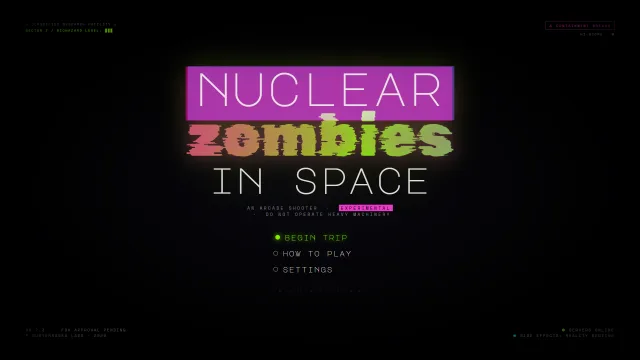
NUCLEAR ZOMBIES IN SPACE – A Psychedelic Twin-Stick Survival Shooter
Type: Game Status: MVP Tech Stack: React 18, Vite, HTML5 Canvas 2D, Web Audio API, Docker, Nginx Problem Statement No domain problem is being solved here in any narrow se...
↗PROJEKTEWPLang – A Focused Multilingual Layer for WordPress
Type: Software Status: Beta Tech Stack: PHP (7.4/8.3), WordPress plugin API (hooks, REST, Gutenberg/Site Editor), MySQL/MariaDB via wpdb (7 custom tables), vanilla JavaSc...
↗SEND A SIGNAL
LET’S MAKE
SOMETHING
monstrous.
An idea beyond safe waters?
For extraordinary collaborations, consulting and workshops: send a signal.