Enchanted Forest – A Camera-Based Generative Exhibition Installation
Type: Software (interactive spatial installation) Status: BetaTech Stack: Python, aiohttp, OpenCV, NumPy, Stereolabs ZED SDK (optional), Three.js, Vite, Vitest, Playwright, WebSocket, Docker, PowerShellProblem StatementA museum, festival or gallery that wants a reactive spatial installation running unattended over a fixed exhibition period faces the whole technical side of it: camera capture, calibration in the actual room,
THE IDEA
Enchanted Forest – A Camera-Based Generative Exhibition Installation
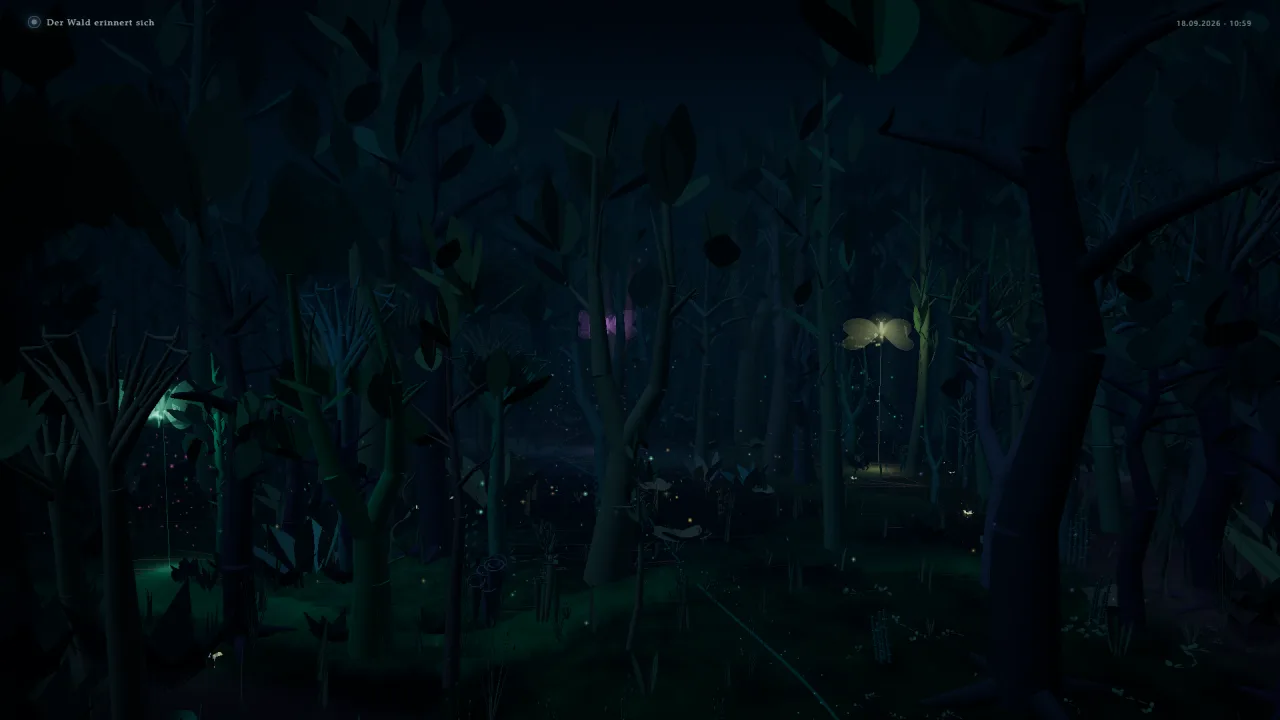
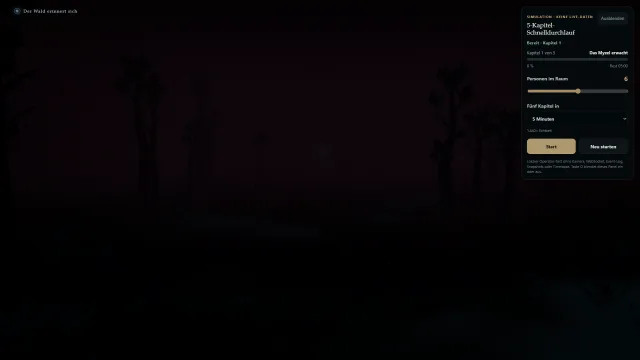
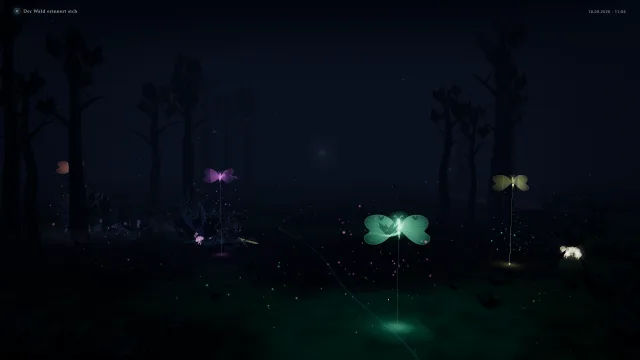
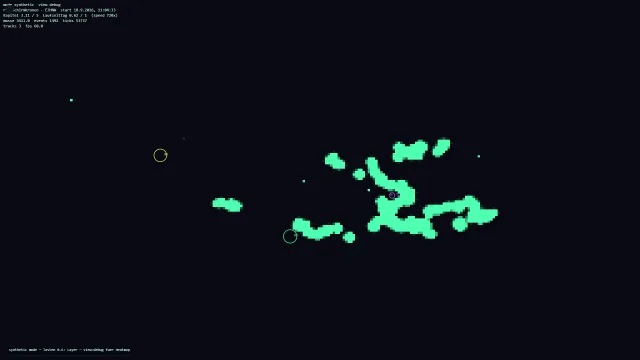
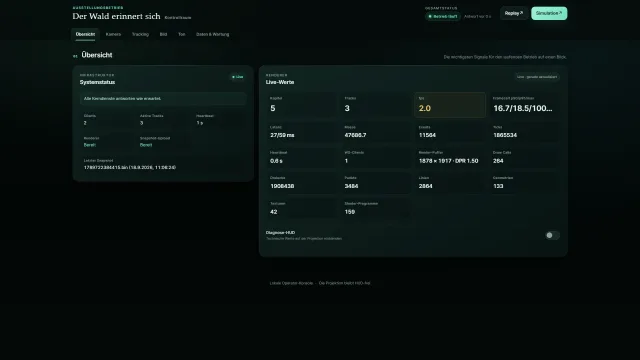
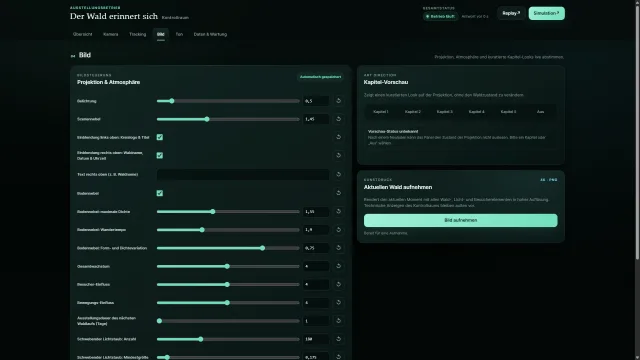
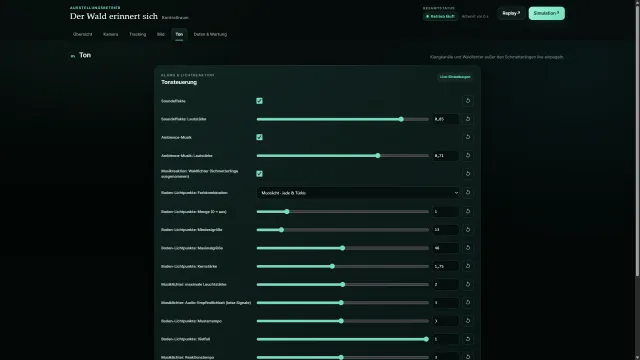
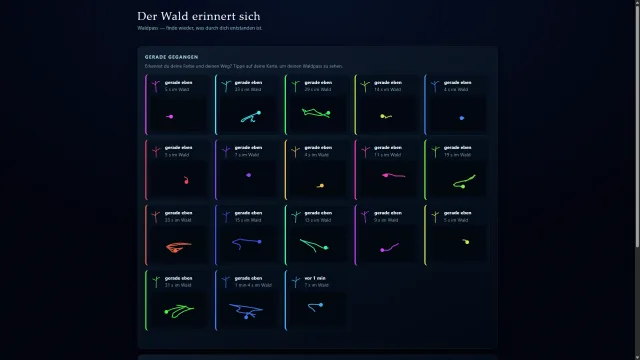
Type: Software (interactive spatial installation) Status: Beta Tech Stack: Python, aiohttp, OpenCV, NumPy, Stereolabs ZED SDK (optional), Three.js, Vite, Vitest, Playwright, WebSocket, Docker, PowerShell Problem Statement A museum, festival or gallery that wants a reactive spatial installation running unattended over a fixed exhibition period faces the whole technical side of it: camera capture, calibration in the actual room, a generative scene that keeps growing visibly over days, and show operation that survives a crash, a restart or a power cut without losing the work that visitors have created. Description A camera-based exhibition installation that runs unattended and turns visitor movement in the room into a bioluminescent 3D forest in real time. A Python/OpenCV tracker — optionally with ZED body tracking — captures positions, writes them as calibrated events into an hourly rotating event log that is treated as the work itself, and distributes them over WebSocket to a Three.js scene. From those events the scene builds a deterministic “memory field” with persistent growth, 27 generative plant species, procedural audio and a five-chapter artistic arc stretched linearly over a configurable exhibition duration of one to thirty days. Every person leaves an individual signature derived from their track ID — colour, form, sound motif — as a lasting root trace; when two people approach each other, an encounter blossom, a connecting arc and a two-note chord are produced. A forest-pass system gives visitors a six-character code with which they can find their own trace online later and briefly highlight it on the projection. An admin control panel allows live calibration, camera changes without a restart, and image and sound fine-tuning; an optional VPS relay lets remote viewers reconstruct the same forest deterministically, read-only, without a video stream. Operation is built for show conditions: preflight checks, watchdog with escalation, a scheduled soft restart, a soak test with a hard process kill and recovery verification, external backup with checksum verification, and CI that runs Python tests, renderer unit tests, a production build and a real Chromium WebGL/WebAudio smoke test on every push. What remains open are the four physical on-site acceptance steps — dark-room test with the final camera, four-point calibration in the built room, visual sign-off on the real projection surface, and an audio level test with the final sound system. Use Case A camera watches visitors in an exhibition space, and out of their movement a glowing digital forest grows live over days — one that remembers every visit. Link: https://github.com/rawk7000/enchanted_forest (private repo) The projection in a late phase: a bioluminescent forest grown over days. Operator simulation: the full five-chapter arc can be presented without a camera. The third chapter — densification — running in simulation mode. Synthetic audience: simulated visitor paths across the whole exhibition arc. Debug view: a heatmap of maturity levels in the deterministic memory field. Control panel: an overview of camera, tracking and the installation's run state. Image controls in the panel, persisted for the running show. Sound controls for the installation's procedural audio layer. Forest pass: visitors recognise their own trace by its colour and time spent.
Impressions

KEEP EXPLORING
More discoveries
Three more pieces from the archive.
 PROJEKTE
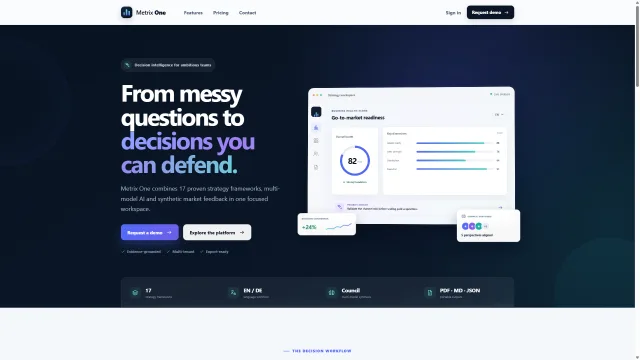
metrix_one – Multi-Tenant SaaS for AI Strategy Frameworks
Type: Software (multi-tenant SaaS, web platform) Status: Beta Tech Stack: Python 3.13, FastAPI, SQLAlchemy (async), Postgres 16 (row-level security), Alembic, Redis + RQ,...
↗ PROJEKTE
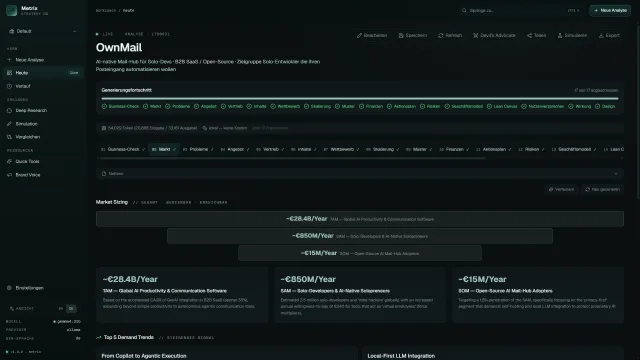
metrix – Strategy Analysis Across 17 Business Frameworks
Type: Software Status: Beta Tech Stack: React 19, TypeScript, Vite, Tailwind CSS v4, React Router, Node/Express, better-sqlite3, tsx, jose, bcryptjs, marked, Puppeteer, D...
↗PROJEKTEdocStar – Configurable Multi-Domain Document Checking System
Type: Software Status: Beta Tech Stack: FastAPI, Python 3.12, PostgreSQL 16 (RLS, JSONB, tsvector), SQLAlchemy, Alembic, Celery, Redis, IBM Docling + EasyOCR, Ollama/vLLM...
↗SEND A SIGNAL
LET’S MAKE
SOMETHING
monstrous.
An idea beyond safe waters?
For extraordinary collaborations, consulting and workshops: send a signal.